

Imagine walking into a room where the lights feel sharper, sounds feel louder, clothes feel itchy, and movement feels confusing.
Now imagine feeling this way every single day.
For many children with Sensory Processing Disorder (SPD), this is their reality.
What Sensory Processing Disorder Really Looks Like
Sensory Processing Disorder isn’t about behavior. It’s about how a child’s brain understands the world.
A child with SPD may:
- Cover their ears at everyday sounds
- Avoid certain clothes, textures, or foods
- Constantly move, jump, or crash into things
- Feel overwhelmed in classrooms or social settings
These children aren’t “too sensitive” or “too active.” Their nervous system simply needs support.
Occupational Therapy: Teaching the Brain to Feel Safe
Occupational therapy for sensory processing disorder helps children make sense of sensory input—so their world feels calmer, clearer, and more manageable.
Think of occupational therapy as a bridge between a child and their environment.
Not by forcing change. But by guiding the brain—gently, playfully, and intentionally.
How Occupational Therapy Changes Everyday Life
- It Organizes Sensory Chaos
Through structured sensory activities, occupational therapy helps the brain respond to sounds, touch, movement, and textures in a balanced way. - It Makes Daily Tasks Easier
From brushing teeth to wearing uniforms or sitting in class—therapy builds independence in everyday routines. - It Reduces Meltdowns, Builds Calm
When sensory needs are met, emotional regulation improves. Fewer meltdowns. More confidence. - It Improves Attention & Learning
A regulated body leads to a focused mind. Children become more ready to learn and participate. - It Builds Social Confidence
As sensory overwhelm reduces, children feel safer engaging with peers, play, and group activities.
The Power of Sensory Integration Therapy
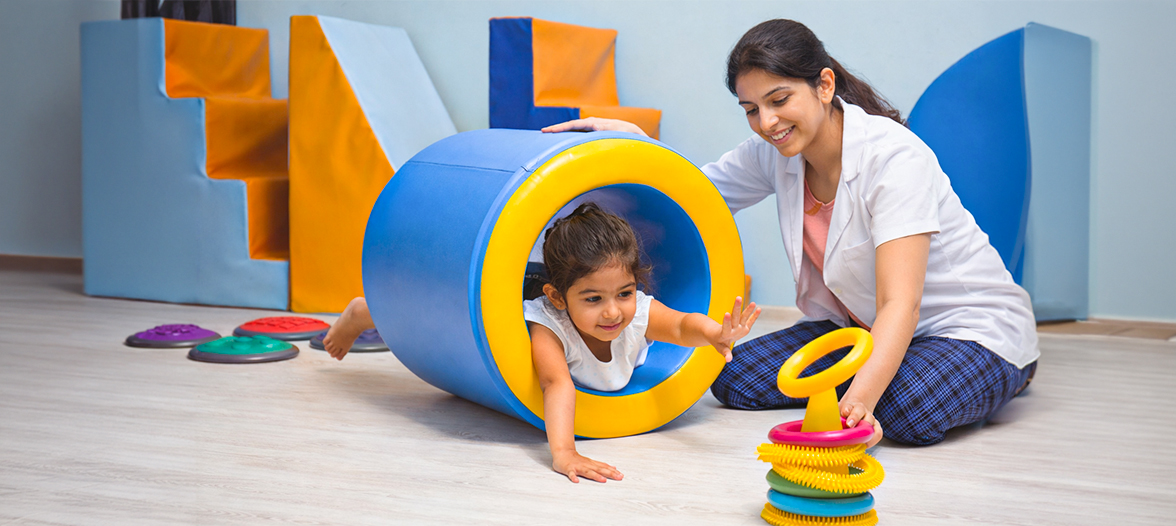
Occupational therapists use sensory integration therapy—carefully designed play activities that help the brain process sensory input better.
You may see:
- Swinging, balancing, climbing.
- Deep pressure and movement activities.
- Texture play with sand, clay, or water.
- Games that improve coordination and body awareness
To a child, it feels like play.
To the brain, it’s powerful rewiring.
Parents Are Part of the Therapy
Occupational therapy doesn’t stop at the centre. Parents are guided to:
- Understand their child’s sensory profile.
- Create sensory-friendly routines at home.
- Respond with empathy, not frustration
Because when parents understand sensory needs, children feel seen—not corrected.
When Should You Consider Occupational Therapy?
If your child:
- Feels overwhelmed by everyday sensations.
- Struggles with routines, transitions, or focus.
- Shows frequent emotional outbursts linked to sensory triggers.
- Occupational therapy can help—especially when started early.
A Calmer World Is Possible
Sensory Processing Disorder doesn’t define a child’s potential. With the right support, children don’t just cope—they thrive.
Occupational therapy helps children feel safe in their bodies, confident in their abilities, and connected to their world.

Dr. Priyadarshini C
About the Author
Dr. Priyadarshini C is an Occupational Therapist with clinical experience in pediatric occupational therapy and sensory integration. She works with children to support developmental skills, sensory regulation, and functional independence through evidence-based therapeutic approaches.