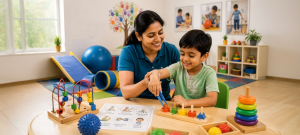


Raising a child with Autism Spectrum Disorder (ASD) comes with unique joys and challenges. Many parents seek effective, evidence-based support that can help their child communicate, learn, and thrive in everyday life. One of the most trusted approaches worldwide is Applied Behavior Analysis (ABA) therapy.
This article explores the benefits of ABA therapy, how it works, and why it is considered one of the most effective interventions for children with autism.
What Is ABA Therapy?
Applied Behavior Analysis (ABA) therapy is a scientific approach that focuses on understanding behavior and how it is influenced by the environment. It uses structured teaching methods, positive reinforcement, and consistent practice to help children learn meaningful skills and reduce behaviors that interfere with learning and daily life.
ABA therapy breaks complex skills into small, manageable steps. Each step is taught systematically, reinforced positively, and practiced until the child can use the skill independently.
How Does ABA Therapy Work for Children with Autism?
ABA therapy begins with a comprehensive assessment of the child’s strengths, challenges, communication level, behavior patterns, and developmental needs. Based on this evaluation, therapists design a personalized therapy plan.
Key techniques used include:
- Positive reinforcementto encourage desired behaviors
- Prompting and fadingto guide learning
- Task analysisto simplify complex skills
- Behavior shapingto gradually build new abilities
- Data trackingto monitor progress and adjust strategies
Sessions may occur at therapy centers, schools, or at home, ensuring skills are practiced in real-life settings.
Benefits of ABA Therapy for Children with Autism
1. Improved Communication and Talking
Many children with autism struggle to express their needs or understand others. ABA therapy supports communication development by:
- Teaching verbal and non-verbal communication
- Encouraging use of gestures, pictures, or assistive devices
- Helping children express needs, feelings, and choices
Improved communication reduces frustration and strengthens relationships.
2. Better Social Skills and Making Friends
Social interaction can be challenging for children with ASD. ABA therapy helps children:
- Understand social cues and body language
- Take turns and share during play
- Initiate and maintain conversations
- Build friendships and engage in group activities
These skills promote inclusion and confidence in social settings.
3. Learning to Cope with Emotions
Children with autism may experience difficulty regulating emotions. ABA therapy teaches:
- Identifying feelings and emotional triggers
- Safe ways to express frustration or anxiety
- Self-calming and coping strategies
This emotional regulation helps children feel more secure and resilient.
4. Help with Behavioral Problems
Challenging behaviors often arise when children cannot communicate needs or cope with overwhelming situations. ABA therapy identifies triggers and replaces negative behaviors with positive alternatives.
It helps reduce:
- Tantrums and aggression
- Self-injurious behavior
- Avoidance and resistance
- Repetitive disruptive behaviors
Instead, children learn adaptive responses that support learning and interaction.
5. Overcoming Daily Obstacles
Everyday tasks can feel overwhelming for children with autism. ABA therapy helps them manage transitions, follow instructions, and adapt to new environments.
Children learn to:
- Follow routines and schedules
- Handle changes more comfortably
- Participate in family and school activities
This improves overall functioning in daily life.
6. Developing Daily Living Skills
One of the most valuable benefits of ABA therapy for autism is building independence through life skills training.
Children learn:
- Personal hygiene and grooming
- Dressing and self-care routines
- Eating and mealtime skills
- Organizing belongings
These abilities promote independence and reduce reliance on caregivers.
7. Preparing for the Real World
ABA therapy focuses on functional skills that prepare children for school, community participation, and adulthood.
Skills include:
- Following classroom instructions
- Waiting patiently and taking turns
- Understanding safety rules
- Engaging appropriately in public settings
This prepares children for real-world success.
8. Increased Focus and Attention
Many children with autism experience difficulty maintaining focus. ABA therapy strengthens:
- Task completion skills
- Attention span
- Listening skills
- Ability to follow multi-step instructions
Improved concentration enhances learning outcomes in both academic and daily settings.
9. Increased Independence and Confidence
As children acquire new skills and overcome challenges, their confidence grows. ABA therapy empowers children to:
- Make choices independently
- Communicate needs effectively
- Participate in daily routines
- Feel capable and self-assured
Confidence is essential for long-term success and emotional well-being.
How RISE Development Centre Can Help Your Autistic Kid?
RISE Development Centre provides compassionate, evidence-based ABA therapy tailored to each child’s unique needs. Their child-centered approach focuses on nurturing strengths while addressing developmental challenges.
What Makes Their Approach Effective?
Individualized Therapy Plans
Every child receives a customized intervention plan based on developmental assessments and personal goals.
Experienced and Certified Therapists
Qualified professionals use evidence-based ABA techniques to ensure measurable progress.
Parent Training & Family Support
Families receive guidance and practical strategies to reinforce learning at home.
Natural Environment Learning
Children practice skills in real-life situations to ensure meaningful and lasting improvements.
Holistic Development Focus
Therapy supports communication, behavior, independence, and social growth.
Through structured intervention and compassionate care, RISE Development Centre empowers children to reach their full potential.
Conclusion
The benefits of ABA therapy extend far beyond behavior management. It equips children with autism with essential communication, social, emotional, and life skills that support independence and long-term success.
With early intervention, personalized strategies, and family involvement, ABA therapy can transform daily challenges into opportunities for growth. Every small step forward builds a stronger foundation for a confident and fulfilling future.
Frequently Asked Questions
How long does it usually take to see progress?
Progress varies based on the child’s needs, therapy intensity, and consistency. Some improvements may appear within a few weeks, while significant developmental gains typically occur over several months.
Is ABA therapy customized for every single child?
Yes. ABA therapy is highly individualized. Programs are tailored to each child’s strengths, developmental level, and specific goals.
Are parents and families involved in the therapy sessions?
Absolutely. Parent involvement is essential. Families are trained to reinforce strategies at home, ensuring consistent learning and progress.
Does ABA focus on strengths or just behaviors?
ABA therapy emphasizes strengths while addressing challenges. It builds new skills by leveraging what the child already does well.
Can ABA therapy help with picky eating or sleep routines?
Yes. ABA techniques can address feeding challenges, bedtime routines, and other daily habits by reinforcing positive behaviors and establishing consistent routines.
What is “Natural Environment Training” in ABA therapy?
Natural Environment Training (NET) teaches skills in real-life settings such as home, school, or playgrounds. This approach helps children apply learned skills naturally in everyday situations.

Praveena Raveendran
About the Author
Praveena Raveendran is the Founder of RISE Development Centre with over 23 years of experience in speech-language pathology and developmental intervention. A Registered Speech-Language Pathologist (RCI), BASLP, and BCaBA (BACB, USA), she integrates ABA with speech and language therapy to support children with communication, behavioural, and developmental challenges through evidence-based, family-centred approaches.