

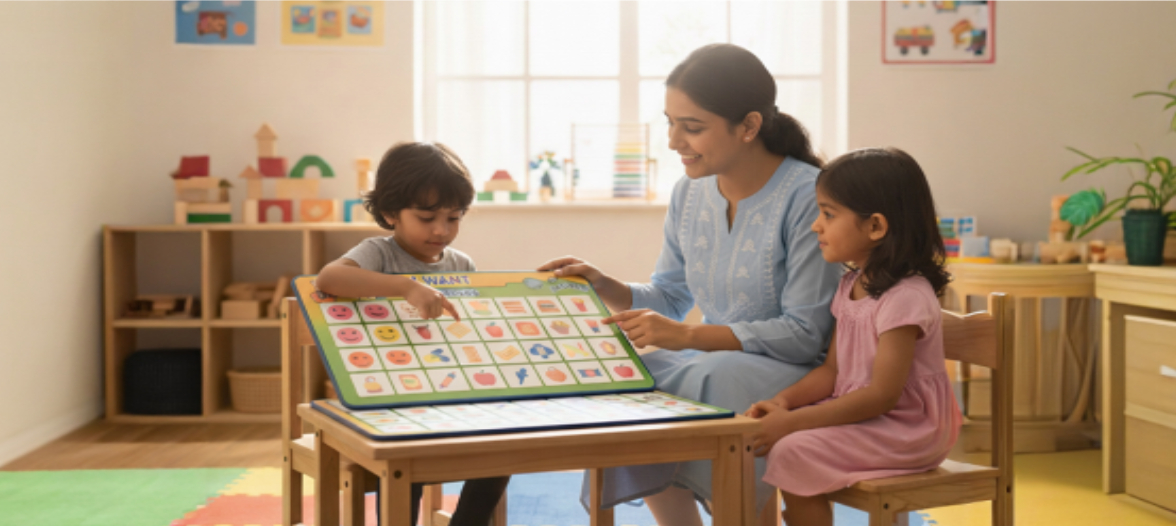
What if behavior wasn’t a problem-but a message waiting to be understood?
Children communicate long before they have the words to do so. Every action, reaction, and response tells a story. Applied Behavior Analysis (ABA) therapy helps decode that story and gently guide children toward positive, meaningful change.
Rather than “fixing” behavior, ABA therapy focuses on understanding why behaviors happen and how children learn best-then using that knowledge to support growth.
Behavior Is Learned-And So Is Change
Behavior doesn’t appear randomly. It is shaped by experiences, environment, and responses from the people around a child. ABA therapy is built on a simple yet powerful idea:
When learning becomes positive, change becomes possible.
Through carefully planned strategies, ABA therapy helps children replace challenging behaviors with skills that help them communicate, connect, and succeed.
The Science, Simplified
ABA therapy is grounded in behavioral science, but its application is deeply human.
Therapists observe:
- What happens before a behavior
- What the behavior looks like
- What happens after
This allows therapists to identify patterns and gently reshape the environment so children are more likely to succeed.
How ABA Therapy Works in Real Life
1. Turning Everyday Moments Into Learning Opportunities
In ABA therapy, learning doesn’t happen only at a table. It happens during:
- Playtime
- Mealtimes
- Classroom routines
- Social interactions
Everyday moments become meaningful teaching moments.
2. Positive Reinforcement, Not Pressure
Children learn best when they feel motivated and safe. ABA therapy uses positive reinforcement-praise, encouragement, and preferred activities-to help children associate learning with success and joy.
Progress feels rewarding, not forced.
3. Small Steps Lead to Big Wins
Complex skills are broken down into simple steps. Whether it’s:
- Making eye contact
- Asking for help
- Managing emotions
- Playing with peers
Each step builds confidence and momentum.
4. Progress That Is Measured, Not Assumed
ABA therapy is data-driven, ensuring that progress is real and meaningful. Therapists regularly review:
- What’s improving
- What needs adjustment
- What supports the child best
Therapy evolves as the child grows.
5. Families Are Part of the Process
ABA therapy works best when families are involved. Parents and caregivers learn strategies that help reinforce skills at home, making progress consistent and lasting.
Who Can Benefit From ABA Therapy?
ABA therapy for children supports those who experience challenges in:
- Communication and language
- Social interaction
- Emotional regulation
- Attention and learning
- Daily living skills
It is commonly used in autism therapy, but its benefits extend to many developmental needs.
ABA Therapy Is About Empowerment
At its heart, ABA therapy is not about changing a child—it’s about giving them tools to express who they are.
Through science, compassion, and consistency, ABA therapy helps children move from frustration to understanding, from struggle to success.
Final Thought
Every child has potential waiting to be unlocked. ABA therapy helps turn small steps into meaningful change—one positive behavior at a time.
If you’re noticing developmental or behavioral concerns, early professional guidance can make all the difference.

Praveena Raveendran
About the Author
Praveena Raveendran is the Founder of RISE Development Centre with over 23 years of experience in speech-language pathology and developmental intervention. A Registered Speech-Language Pathologist (RCI), BASLP, and BCaBA (BACB, USA), she integrates ABA with speech and language therapy to support children with communication, behavioural, and developmental challenges through evidence-based, family-centred approaches.