

When a child experiences difficulty communicating, it can create worry and uncertainty for parents. One of the most common and understandable questions families ask is: How long does speech therapy take to work? While there is no one-size-fits-all answer, understanding the therapy process, expected timelines, and factors that influence progress can help parents feel more confident and prepared.
Speech therapy is a structured, evidence-based, and individualized intervention designed to improve a child’s communication abilities. It supports not only speech clarity but also language development, comprehension, social interaction, feeding skills, and emotional confidence. Progress depends on multiple factors, including the child’s age, type of speech or language difficulty, severity of the condition, and consistency of therapy sessions.
Let’s explore what speech therapy involves, how it benefits children, and what kind of timeline parents can realistically expect.
What Is Speech Therapy?
Speech therapy is a specialized service provided by certified Speech-Language Pathologists (SLPs). These professionals assess, diagnose, and treat communication and swallowing disorders in children and adults.
For children, speech therapy may address:
- Speech delays
- Language disorders
- Articulation difficulties
- Stuttering
- Voice disorders
- Autism-related communication challenges
- Childhood apraxia of speech
- Feeding and oral-motor difficulties
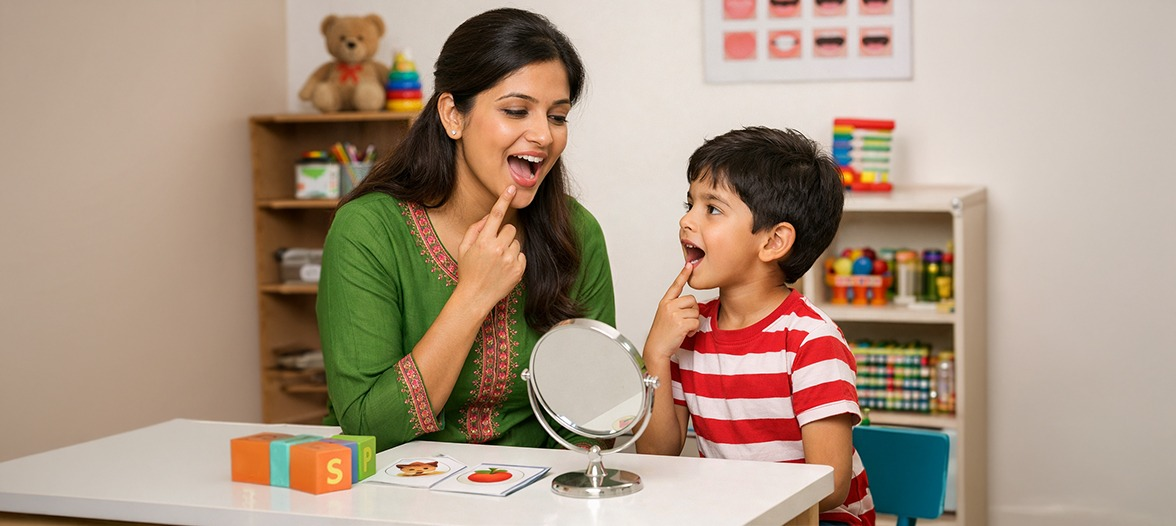
Therapy sessions are carefully designed to be engaging and child-friendly. They often include play-based learning, interactive storytelling, games, structured exercises, and practical communication tasks. Each session is customized to meet the child’s developmental level and individual goals.
Speech therapy is not simply about “fixing speech.” It is about empowering children with the skills they need to communicate effectively, participate in learning, and build meaningful relationships.
How Does Speech Therapy Help Your Child?
Speech therapy supports a child’s overall growth and development far beyond pronunciation correction. Communication is foundational to learning, emotional regulation, and social success. When communication improves, nearly every area of development benefits.
Improving Articulation and Clarity
Articulation refers to how speech sounds are produced. Some children substitute sounds, omit sounds, or distort them, making their speech difficult to understand. For example, a child might say “wabbit” instead of “rabbit” or leave off final sounds in words.
Speech therapy teaches children how to correctly position their tongue, lips, and jaw to produce accurate sounds. Therapists use repetition, sound drills, visual cues, and engaging activities to build muscle coordination and sound awareness.
As clarity improves:
- Children are better understood by teachers and peers
- Communication breakdowns decrease
- Frustration is reduced
- Confidence in speaking increases
Clear articulation also strengthens early literacy skills because children who can recognize and produce sounds accurately tend to perform better in reading and spelling.
Expanding Vocabulary and Sentence Structure
Some children may have limited vocabulary or difficulty forming complete sentences. Others may struggle with grammar, verb tenses, or word order. Language delays can affect academic performance and social interaction.
Speech therapy supports vocabulary expansion and grammatical development. Therapists introduce new words in meaningful contexts and help children combine words into structured sentences.
With stronger language skills, children can:
- Express needs and emotions clearly
- Describe experiences in detail
- Ask questions confidently
- Participate in classroom discussions
- Tell stories with logical sequencing
Improved language structure supports both academic learning and everyday communication.
Enhancing Listening and Comprehension Skills
Communication is a two-way process. Children must understand language before they can respond appropriately. Some children struggle to follow directions, process information, or answer questions accurately.
Speech therapy strengthens receptive language (understanding). Therapists help children improve:
- Listening attention
- Following one-step and multi-step instructions
- Understanding “who,” “what,” “where,” and “why” questions
- Processing classroom language
- Interpreting conversations
When comprehension improves, children become more independent learners and participate more effectively in school activities.
Developing Social and Conversational Skills (Pragmatics)
Social communication skills are essential for building friendships and navigating group settings. Some children struggle with turn-taking, eye contact, greetings, or staying on topic in conversation.
Speech therapy teaches pragmatic skills such as:
- Taking conversational turns
- Maintaining eye contact
- Understanding facial expressions and tone
- Using appropriate greetings
- Respecting personal space
- Responding appropriately in social situations
These skills help children build relationships, reduce social anxiety, and feel more comfortable in peer interactions.
Strengthening Oral-Motor Muscles for Feeding and Speech
Speech requires coordination of facial muscles, lips, tongue, and jaw. Weakness or poor coordination can affect both speech clarity and feeding abilities.
Speech therapy may include oral-motor exercises that improve muscle strength and coordination needed for:
- Clear speech production
- Chewing and swallowing
- Safe feeding habits
- Saliva control
For children with feeding difficulties, therapy can significantly improve comfort and safety during meals.
Increasing Self-Confidence and Reducing Frustration
Communication challenges can lead to frustration, withdrawal, or behavioral concerns. When children cannot express themselves clearly, they may feel misunderstood.
As speech therapy improves communication skills, children experience success. This builds confidence and reduces emotional stress. Children become more willing to speak, participate in class, and engage socially.
Confidence gained through improved communication positively impacts emotional well-being and overall development.
How Long Does Speech Therapy Take to Work?
The timeline for speech therapy varies widely. Some children show early improvements within a few weeks, while others require months or longer to achieve consistent, independent communication skills.
Short-Term vs. Long-Term Results
In the early stages of therapy, parents may notice:
- Increased attempts to speak
- Better sound imitation
- Growth in vocabulary
- Improved responsiveness
However, lasting progress often requires consistent therapy over several months. Therapy continues until skills are generalized across home, school, and social settings.
Average Timelines for Speech Delays & Disorders
Condition | Typical Improvement Timeline |
| Mild speech delay | 3–6 months |
| Moderate speech delay | 6–12 months |
| Severe speech disorders | Depends on the child’s progress |
| For apraxia or autism-related communication issues | long-term therapy may be needed |
Although every child progresses at their own pace, typical improvement ranges may include:
- Mild speech delay: 3–6 months
- Moderate speech delay: 6–12 months
- Severe speech disorders: Variable, depending on progress
- Apraxia or autism-related communication challenges: May require long-term therapy
These timelines are estimates and may vary based on individual needs.
Factors That Influence Speech Therapy Duration
Several key factors determine how quickly speech therapy works:
Severity of the Condition
More complex diagnoses often require longer intervention.
Age at Start of Therapy
Early intervention leads to faster and more effective outcomes.
Frequency of Sessions
Children attending regular sessions (1–3 times per week) progress more steadily.
Consistency and Home Practice
Daily reinforcement at home significantly accelerates improvement.
Child’s Motivation and Learning Style
Engagement and participation influence therapy success.
Understanding Speech Development Milestones
Monitoring developmental milestones helps parents identify potential delays early.
0–12 Months
- Responds to sounds
- Babbles
- Uses gestures
1–2 Years
- Says simple words
- Follows simple instructions
- Combines two words
3–5 Years
- Speaks in full sentences
- Is understood by strangers
- Engages in conversations
If milestones are delayed, early evaluation is recommended.
What to Expect During Speech Therapy
Speech therapy sessions are interactive and child-centered. Activities may include:
- Play-based communication tasks
- Sound repetition practice
- Storytelling and role-play
- Social interaction games
- Oral-motor exercises
Therapists adapt sessions to match the child’s interests and developmental level.
How Is Progress Measured?
Speech therapy progress is carefully monitored through:
Goal Tracking
Therapists set measurable objectives and review improvements regularly.
Standardized Assessments
Periodic evaluations assess developmental growth.
Real-Life Application
Progress is measured by how well skills transfer to everyday situations.
Frequently Asked Questions
Can children complete speech therapy?
Yes. Many children finish therapy once communication skills reach age-appropriate levels.
How often are sessions scheduled?
Typically 1–3 sessions per week.
Is it too late after age 5?
No. Speech therapy can be effective at any age, though early intervention is ideal.
Conclusion
So, how long does speech therapy take to work? While some children show improvement within weeks, meaningful and lasting progress often requires several months of consistent therapy and home practice. Every child develops at their own pace, and progress depends on multiple factors.
Speech therapy is more than correcting sounds—it builds communication skills, strengthens confidence, enhances learning, and supports social development. With early intervention, parental involvement, and professional guidance, children can overcome communication challenges and achieve lasting success.
When communication improves, children gain more than clearer speech—they gain confidence, independence, and the ability to connect meaningfully with the world around them.

Namitha
About the Author
Namitha is a Speech-Language Pathologist with over 8 years of experience in assessing and supporting children with speech, language, and communication challenges. She specializes in delivering evidence-based, child-centred interventions tailored to each child’s developmental needs.