

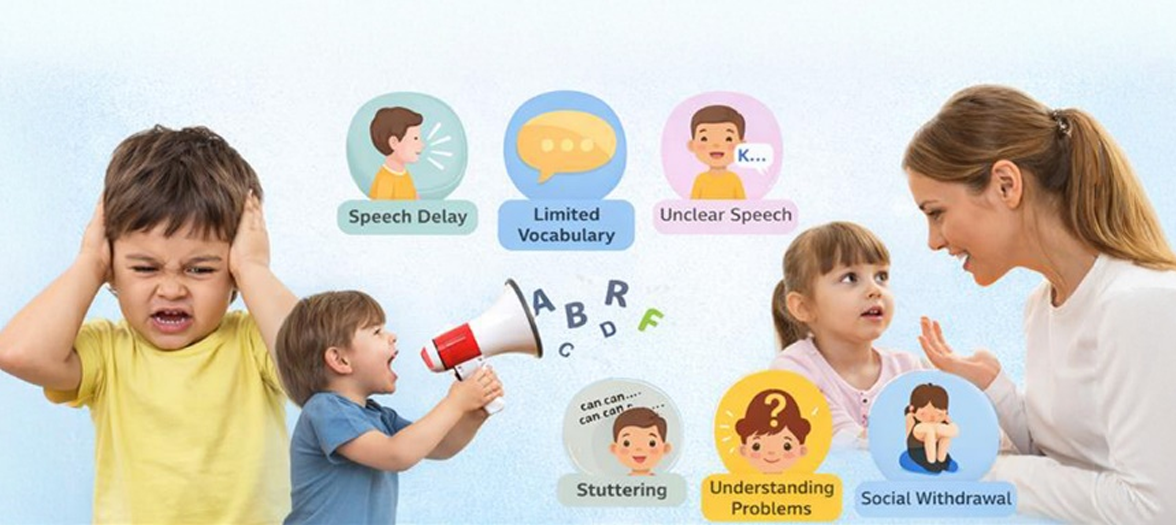
Children speak long before they say their first word. Through gestures, sounds, expressions, and behaviour, they are constantly communicating. When speech and language development doesn’t follow a smooth path, children often show us before they tell us.
Many parents hesitate, hoping their child will “catch up.” While some children do, others need a little guidance—and recognizing the signs early can change everything.
Communication Isn’t Just Talking
Speech development is more than pronunciation. It includes:
- Understanding what others say
- Expressing thoughts and emotions
- Interacting socially
- Building confidence
When any of these pieces feel missing or delayed, speech therapy for children can provide the support they need.
Signs Worth Paying Attention To (Even the Subtle Ones)
1. Your Child Communicates… But Not With Words
If your child relies heavily on pointing, pulling your hand, or gestures instead of words, it may be their way of compensating for speech difficulties.
This is often seen in language delay in toddlers and benefits greatly from early therapy.
2. Frustration Melts Down Into Behaviour
Tantrums, crying, or withdrawal can be signs of a child who knows what they want to say but can’t express it clearly.
Speech therapy helps reduce frustration by giving children the tools to communicate effectively.
3. Speech Sounds Are Hard to Understand
By age three, familiar adults should understand most of what a child says. If speech remains unclear or inconsistent, it may indicate articulation or phonological challenges.
Early support prevents these patterns from becoming habits.
4. “They Understand… But Don’t Respond”
Does your child seem to hear but not follow instructions consistently? This could signal difficulty in processing or understanding language—not attention issues.
Speech therapy addresses receptive language skills alongside expressive communication.
5. Words Are There, But Sentences Aren’t
If vocabulary grows slowly or words aren’t combined into sentences beyond age expectations, this could indicate delayed language organization.
Speech therapy helps children build structure, not just vocabulary.
6. Talking Is Avoided in Social Settings
Children who avoid speaking in groups, stay quiet in class, or let others speak for them may lack confidence in communication.
Supporting social communication skills can prevent long-term emotional impact.
7. Stuttering Doesn’t Ease Over Time
Some repetitions are normal, but consistent stuttering, tension, or fear around speaking should not be ignored.
Speech therapy helps children speak smoothly and confidently—without pressure.
Why Waiting Isn’t Always the Best Option
The brain is most adaptable during early childhood. Early speech therapy support can:
- Strengthen learning readiness
- Improve peer interactions
- Boost self-esteem
- Prevent academic struggles
The earlier the support, the easier the progress.
What Speech Therapy Really Looks Like
Forget the drills and pressure. Modern speech therapy is:
- Play-based for young children
- Activity-oriented for school-aged kids
- Personalized and child-friendly
- Family-inclusive and goal-driven
Parents are partners in the process—not spectators.
A Gentle Reminder for Parents
Seeking speech therapy doesn’t label your child—it empowers them.
A simple assessment can offer:
- Clarity instead of doubt
- Direction instead of waiting
- Confidence instead of worry
Sometimes, the smallest step leads to the biggest change.
Conclusion: Listening Beyond Words
Your child may already be telling you something—through silence, frustration, or hesitation. Recognizing the signs early allows you to respond with understanding, not uncertainty.
With the right guidance, children don’t just learn to speak—they learn to be heard.

Namitha
About the Author
Namitha is a Speech-Language Pathologist with over 8 years of experience in assessing and supporting children with speech, language, and communication challenges. She specializes in delivering evidence-based, child-centred interventions tailored to each child’s developmental needs.