

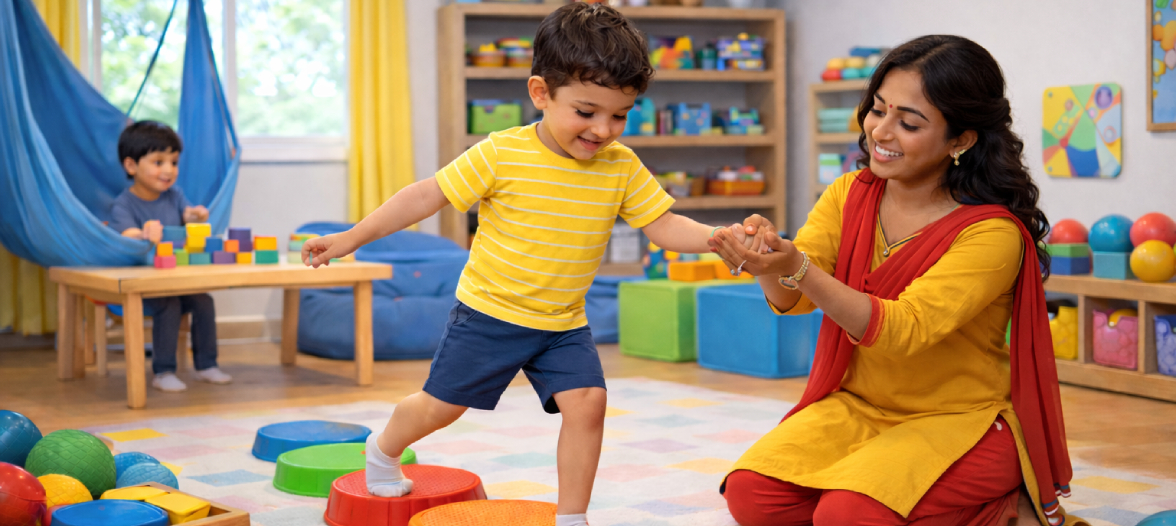
For many children with autism, everyday activities that seem simple—tying shoelaces, tolerating loud sounds, holding a pencil, or transitioning between tasks—can feel overwhelming. These challenges are not signs of inability; they reflect how differently a child experiences and processes the world.
Occupational Therapy (OT) bridges this gap by transforming daily struggles into achievable life skills, helping children participate confidently in home, school, and social environments.
Understanding Autism Through Daily Life
Autism affects how children process sensory information, plan movements, regulate emotions, and interact with their surroundings. As a result, daily routines may feel unpredictable or exhausting for them.
Occupational therapy focuses on function, not labels—helping children succeed in real-life moments such as:
- Getting dressed independently
- Sitting through classroom activities
- Playing with peers
- Managing emotions during change or stress
The goal is not perfection, but progress and participation.
What Makes Occupational Therapy Different for Children with Autism?
Occupational therapy does not rely on one-size-fits-all methods. Instead, it adapts to the child’s unique needs through:
- Play-based learning
- Sensory integration techniques
- Real-life task training
- Strength-based goal setting
Therapy is designed to feel safe, engaging, and empowering, allowing children to learn at their own pace.
Key Life Skills Built Through Occupational Therapy
1. Sensory Regulation: Finding Balance in a Noisy World
Children with autism may be over- or under-sensitive to sound, touch, movement, or light. OT helps children:
- Tolerate sensory input without distress
- Improve attention and calmness
- Reduce meltdowns and avoidance behaviors
2. Motor Skills: From Movement to Mastery
Occupational therapy strengthens:
- Fine motor skills for writing, eating, and dressing
- Gross motor coordination for balance and posture
- Body awareness and confidence in movement
3. Independence in Daily Routines
OT supports children in mastering:
- Feeding and mealtime skills
- Dressing and grooming
- Organizing tasks and transitions
These skills foster independence and reduce reliance on caregivers.
4. Emotional Regulation and Focus
Through structured strategies, children learn to:
- Identify emotions
- Cope with frustration
- Improve attention and task completion
What Happens in an Occupational Therapy Session?
An OT session may look like play—but every activity has purpose.
A session may include:
- Obstacle courses for balance and coordination
- Sensory play using textures and movement
- Handwriting and fine motor games
- Daily-life simulations like buttoning or pouring
- Calm-down routines and focus-building activities
Each session is customized and goal-oriented, making learning both effective and enjoyable.
Why Early Occupational Therapy Matters
The early years are a period of rapid brain development. Early occupational therapy:
- Builds strong neurological foundations
- Prevents secondary learning difficulties
- Improves school readiness
- Encourages independence from an early age
Early support does not limit a child—it unlocks potential.
Parents: The Most Important Part of Therapy
Occupational therapy works best when parents are active partners. Therapists guide families by:
- Providing home strategies
- Teaching daily skill-building techniques
- Supporting consistent routines
- Celebrating small wins
When therapy extends beyond the clinic into daily life, progress becomes faster and more meaningful.
Signs Your Child May Benefit from Occupational Therapy
You may consider OT if your child:
- Avoids certain textures, sounds, or movements
- Struggles with handwriting or self-care
- Has difficulty focusing or following routines
- Experiences frequent frustration or emotional outbursts
- Finds social participation challenging
Early evaluation leads to early empowerment.
Conclusion: Building Skills for Life, Not Just Today
Occupational Therapy for children with autism is about helping them thrive in their own world—at their own pace. By strengthening daily life skills, OT builds independence, confidence, and resilience that extend far beyond childhood.
With the right guidance, patience, and support, every child can grow into their abilities and experience success in everyday life.

Dr. Priyadarshini C
About the Author
Dr. Priyadarshini C is an Occupational Therapist with clinical experience in pediatric occupational therapy and sensory integration. She works with children to support developmental skills, sensory regulation, and functional independence through evidence-based therapeutic approaches.