
Introduction
Social interaction is an important part of everyday life. From making friends and participating in group activities to understanding emotions and communicating effectively, social skills help children connect with the world around them. For children with Autism Spectrum Disorder (ASD), these interactions can often be challenging. Many children with autism experience difficulties understanding social cues, expressing themselves appropriately, and building meaningful relationships with peers.
While every child with autism is unique, developing social competence is often a key goal for families and therapists. One of the most effective approaches for achieving this is social skills training for children with autism. Through structured teaching, guided practice, and real-life application, social skills training helps children improve communication, gain confidence, and develop lasting social connections.
This article explores the importance of social skills training, how it benefits children with autism, and the role parents and professionals play in supporting long-term success.
Social Skills Challenges in Autism
Children with autism often face challenges in areas that many people learn naturally through observation and experience. These difficulties may affect their ability to participate comfortably in social situations and form relationships.
Common social challenges include:
- Difficulty initiating or maintaining conversations
- Limited understanding of facial expressions and body language
- Challenges with eye contact and active listening
- Difficulty taking turns during conversations or activities
- Trouble understanding other people’s thoughts and emotions
- Limited interest in peer interactions
- Anxiety in social settings
- Difficulty adapting to social expectations in different environments
These challenges can lead to misunderstandings, isolation, frustration, and reduced self-confidence. Over time, children may become hesitant to engage in social situations because they fear making mistakes or being misunderstood.
Fortunately, with the right support and intervention, children can learn essential social skills and become more comfortable interacting with others.
What is Social Skills Training (SST) for Autism?
Social Skills Training (SST) is a structured intervention designed to teach children how to interact effectively with others in various social situations. It focuses on helping children understand social expectations, interpret social cues, and practice appropriate responses.
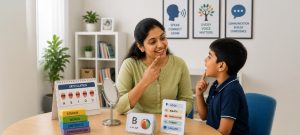
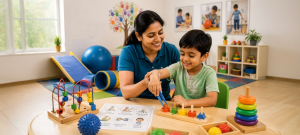
Social skills training for children with autism typically involves direct instruction, modeling, role-playing, group activities, and real-world practice. The training is customized based on each child’s strengths, challenges, age, and developmental level.
Key areas covered in SST may include:
- Greeting others appropriately
- Starting and ending conversations
- Maintaining eye contact
- Understanding personal space
- Sharing and taking turns
- Recognizing emotions
- Managing conflicts
- Building friendships
- Understanding social rules
- Problem-solving in social situations
Sessions may take place individually or in small groups where children can practice newly learned skills in a supportive environment.
How Social Skills Training Helps Children with Autism
Developing Core Communication and Listening Skills
Communication forms the foundation of social interaction. Many children with autism may struggle with both verbal and nonverbal communication, making it difficult to express themselves or understand others.
Social skills training helps children learn how to:
- Initiate conversations
- Ask and answer questions appropriately
- Maintain a topic during conversations
- Listen actively to others
- Understand tone of voice
- Use appropriate body language
Through repeated practice and guided instruction, children become more comfortable expressing their thoughts and responding to others.
For example, a child may learn how to greet classmates, ask a friend to join a game, or participate in classroom discussions. These skills contribute significantly to improved social participation and communication confidence.
As communication skills improve, children often experience fewer misunderstandings and greater success in social situations.
Enhancing Perspective-Taking and Empathy
One of the common challenges associated with autism is understanding the thoughts, feelings, and perspectives of others. Children may find it difficult to recognize how another person is feeling or why someone reacts in a certain way.
Social skills training for kids with autism often includes activities designed to improve perspective-taking and emotional understanding.
Children learn to:
- Identify facial expressions
- Recognize emotions in others
- Understand different viewpoints
- Interpret social situations
- Respond appropriately to others’ feelings
Therapists may use visual supports, social stories, role-playing activities, and interactive games to teach these concepts.
As children develop empathy and emotional awareness, they become better equipped to navigate social situations successfully. They learn how their actions affect others and become more capable of forming positive relationships.
These skills are valuable not only for friendships but also for family interactions, school participation, and future workplace success.
Building Social Confidence and Reducing Anxiety
Many children with autism experience anxiety in social settings. Uncertainty about what to say, how to behave, or how others may respond can make social situations feel overwhelming.
Social skills training provides children with structured opportunities to learn and practice social behaviors in a safe and supportive environment.
Through repeated exposure and guided practice, children gain:
- Increased confidence in social interactions
- Better understanding of social expectations
- Reduced fear of making mistakes
- Greater willingness to participate in group activities
- Improved self-esteem
When children understand what is expected of them and have opportunities to practice these skills successfully, social situations become less intimidating.
Success in small interactions often leads to greater confidence in more complex social environments. Over time, children begin to approach social opportunities with greater comfort and enthusiasm.
Fostering Meaningful Friendships and Peer Connections
Friendships play an important role in emotional well-being, personal development, and overall quality of life. However, building and maintaining friendships can be challenging for children with autism.
Social skills training focuses on teaching the skills necessary for forming and sustaining peer relationships.
Children learn how to:
- Introduce themselves
- Join group activities
- Share interests
- Take turns
- Show kindness and respect
- Resolve disagreements
- Understand friendship expectations
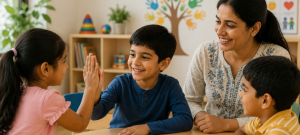
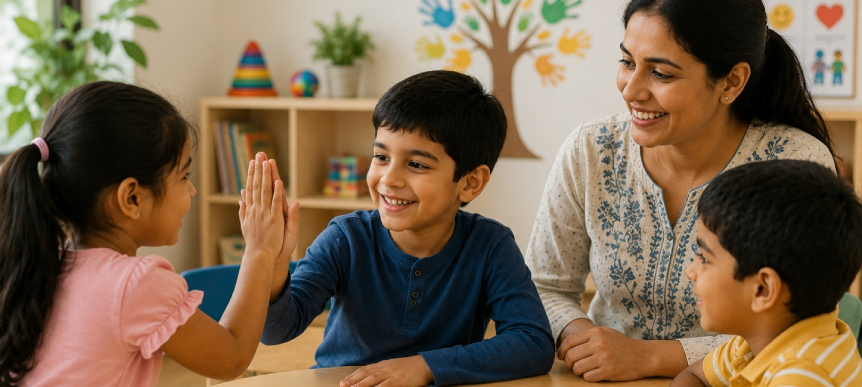
Group-based social skills programs are especially beneficial because they provide real-life opportunities for children to practice interacting with peers.
As children become more socially competent, they often experience increased acceptance among classmates and peers. These positive experiences encourage further social engagement and contribute to stronger friendships.
Developing meaningful social connections helps children feel valued, supported, and included in their communities.
The Role of Parents and Caregivers
Parents and caregivers play a critical role in reinforcing social skills learned during therapy sessions. Consistent support at home helps children apply new skills across different environments and situations.
Collaborating with Therapists and Professionals
Successful social skills development requires teamwork between families and professionals.
Parents can work closely with therapists by:
- Understanding therapy goals
- Learning strategies used during sessions
- Monitoring progress
- Providing feedback about social challenges at home or school
- Participating in parent training opportunities
Open communication between families and therapists ensures consistency and helps maximize the effectiveness of social skills training.
When children receive similar guidance across different settings, learning becomes more meaningful and sustainable.
Providing Reinforcement and Support at Home
Home provides countless opportunities for practicing social skills in everyday situations.
Parents can encourage social development by:
- Modeling appropriate social behavior
- Practicing conversation skills
- Encouraging eye contact
- Playing turn-taking games
- Organizing playdates
- Discussing emotions and social situations
- Praising positive social interactions
Positive reinforcement is especially important. Celebrating small successes helps build motivation and confidence.
Children are more likely to continue using newly learned skills when they receive encouragement and recognition for their efforts.
Facilitating Long-Term Maintenance of Skills
Learning a skill is only the first step. Maintaining and generalizing that skill across different environments is equally important.
Parents can support long-term success by:
- Providing ongoing opportunities for social interaction
- Encouraging participation in community activities
- Supporting extracurricular involvement
- Practicing skills regularly
- Helping children reflect on social experiences
Consistent exposure to social situations allows children to strengthen and refine their abilities over time.
The ultimate goal is for children to use their social skills naturally and independently across various settings.
Why Early Intervention Is Necessary
Early intervention is one of the most important factors in helping children with autism achieve positive developmental outcomes.
During early childhood, the brain is highly adaptable and responsive to learning. Introducing social skills training during these formative years allows children to develop critical social abilities before challenges become more deeply ingrained.
Benefits of early intervention include:
- Improved communication skills
- Greater social participation
- Better academic readiness
- Increased independence
- Reduced behavioral challenges
- Enhanced confidence and self-esteem
Early social skills development also creates a strong foundation for future relationships, educational success, and community involvement.
While children of all ages can benefit from social skills training, starting early often leads to stronger and more lasting outcomes.
Conclusion
Building social connections is an essential part of a child’s growth and well-being. For children with autism, learning how to communicate effectively, understand others, and navigate social situations may require additional support and guidance.
Social skills training for children with autism provides structured opportunities to develop these critical abilities. By improving communication, enhancing empathy, building confidence, and fostering meaningful friendships, social skills training empowers children to participate more fully in everyday life.
With the support of therapists, educators, and families, children can develop the skills they need to create lasting relationships and experience greater success across home, school, and community environments.
Every child deserves the opportunity to connect, belong, and thrive. Through consistent practice, encouragement, and early intervention, social skills training can help children with autism unlock their potential and build a future filled with confidence and meaningful social connections.