
Understanding Occupational Therapy (OT)
When exploring what is the goal of occupational therapy, it is essential to understand the foundation of occupational therapy (OT). Occupational therapy is a client-centered healthcare approach that supports individuals in developing, recovering, or maintaining the skills needed for daily living and meaningful activities, referred to as “occupations.”
These occupations include basic self-care activities such as eating, dressing, and grooming, as well as more complex tasks like working, studying, and social interaction. Occupational therapy does not focus only on physical abilities. It also addresses cognitive, emotional, and social aspects of functioning.
In simple terms, the purpose of occupational therapy is to help individuals live independently, confidently, and meaningfully, regardless of any physical, developmental, or neurological challenges.
The Difference Between Occupational Therapy and Physical Therapy
| Aspect | Occupational Therapy (OT) | Physical Therapy (PT) |
|---|---|---|
| Focus | Daily activities and independence | Movement, strength, and mobility |
| Goal | Improve ability to perform everyday tasks | Restore physical function and movement |
| Approach | Functional and activity-based | Exercise and movement-based |
| Example | Helping a child learn to hold a pencil | Strengthening hand muscles |
| Target Area | Physical, cognitive, emotional skills | Physical rehabilitation |
For example, a physical therapist may help a person regain strength in their arm after an injury. An occupational therapist, however, will help that person use their arm effectively to perform tasks such as writing, cooking, or dressing.
This highlights that occupational therapy focuses on applying abilities in real-life situations, making it essential for independent living.
Core Goals of Occupational Therapy
- Increasing Independence in Daily Activities
One of the primary goals of occupational therapy is to enable individuals to perform daily tasks independently. These tasks include bathing, dressing, eating, grooming, and mobility.Therapists use adaptive techniques, assistive tools, and structured training to make these activities manageable.Example: A child who struggles to button their shirt may be taught step-by-step techniques using larger buttons or adaptive tools until they gain independence.
For adults recovering from injury, therapists may introduce modified ways of cooking or dressing to reduce dependence on caregivers.
- Improving Quality of Life
Occupational therapy aims to enhance overall quality of life by enabling individuals to participate in meaningful activities. When people can engage in hobbies, social interactions, and daily routines, they experience a sense of purpose and satisfaction.Example: An elderly individual who enjoys gardening but has mobility challenges may be trained to use modified tools or seated gardening techniques to continue their hobby.
Similarly, a child with developmental delays may be supported in participating in classroom activities, improving both confidence and happiness.
- Enhancing Physical and Cognitive Skills
Occupational therapy focuses on improving both physical and cognitive abilities. This includes:- Fine motor skills such as writing or holding objects
- Gross motor skills such as balance and coordination
- Cognitive skills like memory, attention, and problem-solving
Example: A child with poor handwriting may engage in activities like bead threading or clay modeling to strengthen hand muscles and improve coordination.
For adults, cognitive exercises may include memory games or task sequencing activities to improve daily functioning.
- Promoting Mental Health and Well-being
Mental health is an integral part of occupational therapy. Therapists help individuals manage stress, anxiety, and behavioral challenges through structured routines and meaningful engagement.
Example: A child experiencing anxiety may be guided through calming techniques such as deep breathing or sensory activities.
Adults dealing with stress may benefit from structured daily routines and activity planning, helping them regain control and emotional balance.
By addressing emotional well-being alongside physical and cognitive skills, occupational therapy ensures holistic development.
Occupational Therapy Purpose for Pediatrics
Occupational therapy plays a crucial role in child development. It helps children achieve milestones, build independence in activities of daily living , sensory and emotional regulation, and adapt to their environment.
- Fine Motor and Gross Motor Coordination
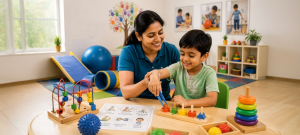
Children develop essential motor skills through occupational therapy. Fine motor skills involve small group of muscles to produce movement such as writing, drawing, and using scissors, while gross motor skills include large group of muscles like running, jumping, and balancing.Example: A child who struggles to hold a pencil may practice grip-strengthening activities like squeezing balls or stacking blocks.
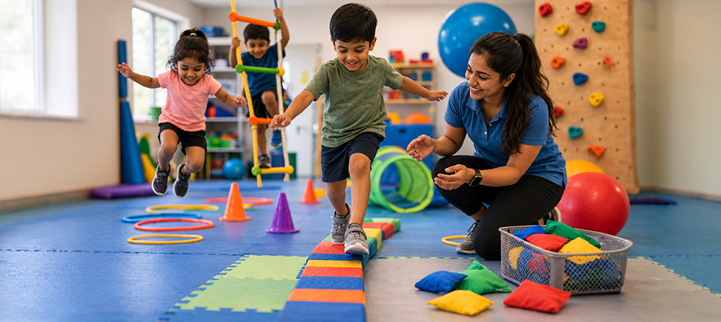
For gross motor development, activities like obstacle courses or balancing exercises help improve coordination.
- Self-Care and Independence Skills
Occupational therapy helps children become independent in daily routines such as dressing, eating, brushing teeth, and using the restroom.Example: A child who finds it difficult to use a spoon may be trained using adaptive utensils and guided practice.
Another example includes teaching step-by-step dressing routines using visual cues.
These skills are essential for building confidence and reducing reliance on caregivers.
- Play Skills and Social Participation
Play is a fundamental part of learning. Occupational therapy supports children in developing appropriate play behaviors, sharing, turn-taking, and interacting with peers.Example: A child who prefers to play alone may be gradually introduced to group play activities to improve social interaction.
Therapists may use role-play or structured games to teach communication and cooperation.
- School Readiness
Occupational therapy prepares children for school by improving attention, sitting tolerance, handwriting, and the ability to follow instructions.It also supports sensory processing, helping children respond appropriately to classroom environments.
Example: A child who struggles to sit still in class may be given sensory strategies like movement breaks or seating adaptations.
Another example includes practicing pre-writing strokes to improve handwriting readiness.
Conclusion
In conclusion, understanding what is the goal of occupational therapy reveals its holistic and impactful nature. Occupational therapy is not limited to treating conditions. It focuses on enabling individuals to live independently, participate in meaningful activities, and improve their overall quality of life.
The purpose of occupational therapy is to empower individuals of all ages to overcome challenges and reach their full potential. Whether it is a child learning to write, an adult recovering from injury, or an elderly individual maintaining independence, occupational therapy plays a vital role in enhancing daily living and well-being.

Dr. Priyadarshini C
About the Author
Dr. Priyadarshini C is an Occupational Therapist with clinical experience in pediatric occupational therapy and sensory integration. She works with children to support developmental skills, sensory regulation, and functional independence through evidence-based therapeutic approaches.